

Four urban destinations where real estate investments have staying power
More than 4 billion people—45% of the world’s population—now live in cities, according to a report released by the United Nations in November 2025, and this number is expected to continue to rise into 2050. So is the wealth cities generate. Just 1,000 cities produce nearly 60% of global GDP, according to Oxford Economics’ 2025 Global Cities Index, released in May 2025. For real estate buyers, that concentration of capital and talent is what makes urban property uniquely resilient. But not all cities are built the same.
The consultancy firm Kearney’s Global Cities Resilience Index, released in October 2025, pinpoints what separates the property markets that recover and appreciate from those that don’t: effective institutional governance, sustainable finance and business environments, technological innovation, social capital and integration into global networks.
Here is what that resilience looks like across cities where homebuyers continue to return, what each of their real estate markets offers right now, and the elements that make these urban centers in particular display serious staying power, despite various hurdles.


I am text block. Click edit button to change this text. Lorem ipsum dolor sit amet, consectetur adipiscing elit. Ut elit tellus, luctus nec ullamcorper mattis, pulvinar dapibus leo.
New York, New York
“Betting against New York City is never a good idea,” says Wendy Arriz, senior global real estate advisor, Sotheby’s International Realty – East Side Manhattan Brokerage. “It has a one-of-a-kind spirit that can’t be beat.”
In the past 25 years, New York has survived a terrorist attack, a global financial crisis that began on Wall Street and a pandemic that led to a rise in remote and hybrid work, reshaping the commercial real estate landscape across the city, and sending many residents to less-dense locations with lower costs of living. Despite that not-so-distant history, New York is growing, with a 4% year-on-year increase in sales in the first quarter of 2026, generating US$6.2 billion in total sales, according to real estate market data published in April 2026 by Sotheby’s International Realty – New York City Brokerages.
“There is an endless supply of people who are New York enthusiasts,” says Arriz, who is based on the Upper East Side. “That’s where the energy comes from—really dynamic people live here, because of the business community and the unrivaled arts. For someone who appreciates that and wants that, there’s no other place that competes.” Housing sales activity has increased since 2019, according to Arriz. However, despite eye-popping deals for ultra-luxury residences, overall prices have been relatively stable over the past decade.
“New York is undervalued. Prices have been flat for a long time and the rest of the nation has had a lot of appreciation that we haven’t seen,” she explains. For example, the median price of a Manhattan residence in 2016 was $1.15 million, The New York Times reported in January 2016,5 while almost a decade later, in 2025, it was $1.28 million, according to Sotheby’s International Realty – New York City Brokerages data. “At some point we’re likely going to see more appreciation,” Arriz continues, “so I think there’s a value play in investing in New York property right now.”
Betting against New York City is never a good idea.
– Wendy Arriz, Senior Global Real Estate Advisor, Sotheby’s International Realty – East Side Manhattan Brokerage
Buyers are looking for “move-in-ready or move-in- ready-ish” units, although they are willing to do a slight “nip and tuck” to a home, such as swapping out the countertops or renovating a bathroom, Arriz adds. However, a value-driven buyer may choose to do the work after purchasing, since they may reap a healthy return on investment (ROI).
New York City’s property market, like many others, is also driven by a lack of inventory. Last year, city officials paved the way for tens of thousands of new homes, many affordable, to be built in Manhattan and Queens, which will take pressure off other areas of the real estate market. Recently, Arriz noticed a resurgence of luxury buyers moving to Fifth or Park Avenue co-ops for perceived access to schools, wider streets and a stronger sense of neighborhood. Other buyers will pay a premium for a brand-new development and are less sensitive to what neighborhood they live in, preferring to “follow the product,” Arriz explains.
That means the outer edges of Manhattan on First, Second or Third Avenues; Long Island City; Queens or the Financial District and Battery Park City, which are not traditionally residential areas but saw a 20% jump in sales in 2025, according to Sotheby’s International Realty data. “They don’t seem to mind living there as much as previous generations,” she says. The expansion of the city’s subway system to Second Avenue on the Upper East Side in 2017 no doubt eased the way for some, Arriz adds.
Meanwhile, headlines regarding a proposed tax on second homes in New York City valued at $5 million or more have given the luxury property market pause. “Many are waiting to see how this proposal unfolds,” Arriz says. “It is not the first time real estate professionals have had to navigate a significant shift in the marketplace.” She also sees no signs of the real estate market slowing down, especially with Wall Street performing so well. “Barring some unforeseen situation, we expect the rest of 2026 to be a strong year,” she says.
Los Angeles, California
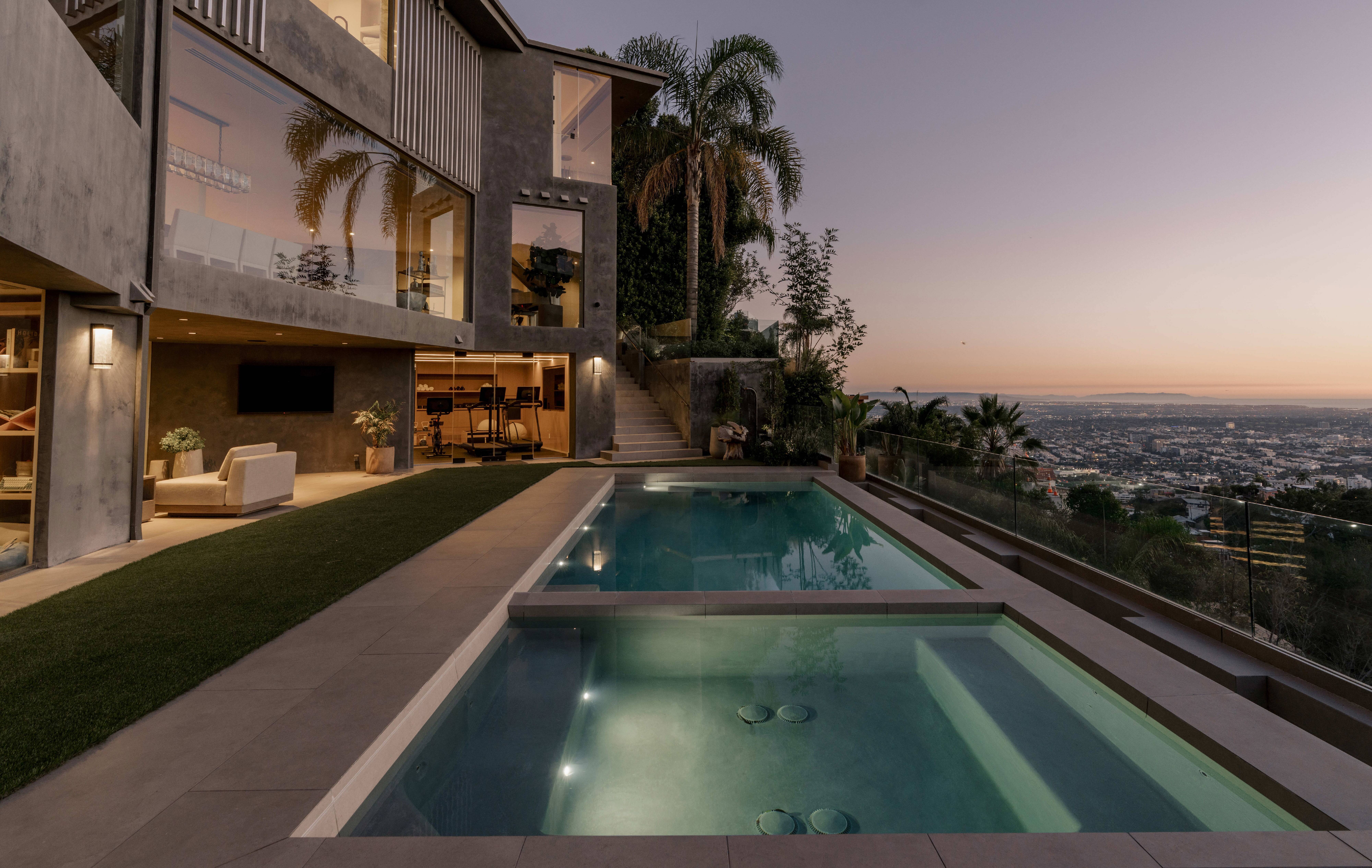
Natural beauty and warm weather are two of the biggest attractions of living in Los Angeles, according to Ernie Carswell, senior global real estate advisor, Sotheby’s International Realty – Beverly Hills Brokerage.
“We just have it so good out here,” he says. “We’re constantly saying how blessed we are with the weather or with the beauty of the backdrop, the mountains down to the ocean. It’s something that we love and we don’t want to let go of.”
Not everyone agrees, Carswell concedes, as there have been some departures of high-net-worth individuals from California for no-income-tax states like Texas and Florida. Still, home prices remain “well above the levels in 2019, in spite of the cooling off we’ve had since 2024,” he says.
This has been due to two upheavals in the local property market, Carswell notes. The first involved the addition of the so-called mansion tax, or the United to House LA Act, which took effect in April 2023. It adds a 4% levy for properties priced at US$5.3 million and up and a 5.5% surcharge for properties conveyed at US$10.6 million or more, according to the city’s Office of Finance.8 “It doubled the cost of selling a home if you own a luxury property,” he explains.
Then the city was devastated by major fires in January 2025. Around 17,000 homes in the Altadena and Pacific Palisades neighborhoods were destroyed, according to a January 2026 report by Columbia University’s Climate School.9 The recovery has been faster in the more affluent Pacific Palisades area, while Altadena is still reeling and recovery has been slow, Carswell says.
In addition, fires over the last decade have also increased insurance costs in the most susceptible areas. The owner of a four-bedroom home in Brentwood, which neighbors Pacific Palisades, could now pay US$120,000 a year in insurance, up from around US$20,000 a decade ago. Brentwood has also seen house prices jump more than 50% in the past year as many displaced families look to stay local, he notes.
There’s a spirit in Los Angeles of ultimate freedom that you don’t want to give up.
That’s why this city keeps rebounding.
– Ernie Carswell, Senior Global Real Estate Advisor, Sotheby’s International Realty – Beverly Hills Brokerage
But the city’s housing options are very diverse. “Los Angeles is a patchwork quilt of values, styles, topography and even fire liabilities,” Carswell says. “ There’s a lot to consider.”
Across the Los Angeles metro area, prices were up 0.4% in March 2026 compared to the same time the year before, according to data published by the California Association of Realtors in April 2026.10 Homes continue to appreciate, with property investors making money despite added taxes or fees. California also has one of the strongest economies in the world, ranking as the fourth-largest according to data released by the International Monetary Fund and the U.S. Bureau of Economic Analysis in April 2025.
Something less concrete keeps Angelenos in place. “There’s a spirit in Los Angeles of ultimate freedom. And once you have it, you don’t want to give it up,” Carswell says. “That’s why this city keeps rebounding.”
Milan, Italy
Long a business and industrial hub, as well as the financial and economic capital of Italy, Milan’s transition into a global city has accelerated in the past two decades. Starting in 2005, long-abandoned railyards in Porta Nuova were redeveloped into a bustling business district focusing on finance, fashion and media. The city started to build international attention, first with the Expo 2015 world fair, and more recently as the host of the 2026 Winter Games, according to a February 2026 report by AP News. Many Italian and international companies, from Prada and Versace to banking and energy firms, are now headquartered there, attracting sophisticated global buyers.
Italy’s flat tax, which caps foreign income tax for homeowners at EU€300,000 (US$351,000) annually, has attracted a new set of property buyers to Milan, according to Diletta Giorgolo, global real estate advisor, Italy Sotheby’s International Realty. Others want to take advantage of Italy’s Residence by Investment Program, which starts at EU€250,000 (US$292,000) according to the country’s Ministry of Enterprises, and allows recipients to travel freely through Europe.
“That has attracted a lot of ultra-high-net-worth individuals (UHNWIs),” says Giorgolo. “More people were coming to Italy for not only residency, but their fiscal regime. We were always used to international buyers, but they came for second homes. The big difference is that now many are buying primary homes.”

Milan took 11th place in a ranking of the cities with the most millionaires, according to an April 2025 report by global wealth advisors Henley & Partners. People are coming to the city from the U.K., the U.S., Canada and even France, where taxes are high, she explains.
The flat tax is particularly appealing for families living in the U.K. who previously benefited from that country’s non-domiciled tax regime, which exempted affluent foreign nationals from paying tax on their overseas investments. Since that program ended last year, Milan’s popularity has only increased, and it is now one of the most requested urban destinations in the country for foreign homebuyers, according to Giorgolo.
Milan’s schools draw families to the city, while entrepreneurs are attracted by its business climate and location, she adds. Milan is “in the center of Europe,” Giorgolo notes. “You can travel quickly to Austria, France, Switzerland, Germany, so there are many advantages.”
Villas with gardens and penthouses are among the most coveted property types, according to Giorgolo. Many homebuyers are looking for residences with historic facades that have been gut-renovated to make way for ultra-modern interiors, she says.
Residential assets in Milan see consistent growth, with “appreciation around 3% to 4%. Some have had a 7% increase, but it’s a continuous, steady growth,” she says. Still, Milan offers relative affordability. “In comparison to other big capitals, Milan—even if there are some very high square-meter prices right now—is still affordable in respect to other cities,” Giorgolo notes, adding that the general cost of living in the city is also good. “Universities are less expensive, and so are restaurants.”
Inventory in Milan, like so many other luxury residential destinations, is extremely limited. That’s especially true for move-in-ready homes, which are rare and sell very quickly, she adds. Plus, Italians are very house proud, with around 80% of residents owning their own home. Those residents do not move often, instead considering homes “part of their family and heritage.”
But when families are ready to sell, trophy assets in Milan—and throughout Italy—go very quickly, according to Giorgolo. Prices for the most sought-after estates can climb as high as EU€30 million (US$35 million).
Milan continues to attract the elite buyers because of its economic engine, as well as the lifestyle it provides and the favorable tax environment. “It’s still a very human-sized capital,” Giorgolo says. “It’s also the closeness to so many other important places, the international schools, and that the prices are continuing to grow at a very good pace.”
Hong Kong, China
After years of oversupply, Hong Kong is bouncing back, according to Teresa Chan, director of business development, List Sotheby’s International Realty, Hong Kong. “Total transactions reached about 62,000 units for 2025, up 17% from 2024, with primary [home] sales making up 33%,” she explains, noting that overall house prices were up 1.13% year-over-year in October 2025. “Supply remains high, with 27,000 unsold units and 20,000 new completions expected in 2026.”
The pandemic was hard on Hong Kong, with restrictions and economic uncertainty slowing the city’s property market until only recently. Home prices in the city rose 3.3% in 2025, the first rise since 2021, Reuters reported, citing government data.15 “On the sales side, activity has continued to improve since March 2026. “Transaction volumes are recovering gradually, led by the primary market, supported by stabilizing interest rates and improved sentiment following Chinese New Year,” Chan says. “Homebuyers remain selective and price‑conscious, but liquidity has clearly improved when pricing is realistic.”
The City’s adherence to an independent common law legal system provides a reliable foundation for investment, while its simple and competitive tax regime enhances wealth preservation.
– Teresa Chan, Director of Business Development, List Sotheby’s International Realty, Hong Kong
In addition, global uncertainty has reinforced Hong Kong’s position as a relatively safe haven for some UHNWIs, Chan notes. “We are seeing growing interest from regional homebuyers and families reassessing geographic exposure, with Hong Kong viewed as a stable base for both capital preservation and long‑term living.”
Mainland Chinese residents make up as much as 30% of homebuyers in Hong Kong, she adds, with UHNWIs from tech sectors and returning overseas property investors also showing interest. Brand-new luxury apartments and condominiums in areas such as The Peak and Mid-Levels are the hottest type of residence, with older buildings only selling at a premium if they’ve been renovated, Chan explains.
In the longer term, real estate investors can expect a healthy profit, according to Chan. “Prices are forecast to rise 3% to 5% in 2026,” she says, adding that luxury residences could see up to 5% appreciation. “ROI depends on the holding period. The long-term is positive due to recovery, but the short-term can be volatile.”
One plus: Hong Kong abolished all additional taxes for residential property buyers in early 2024, including the Buyer’s Stamp Duty and the Special Stamp Duty, she adds.
All buyers, whether permanent residents or not, are now subject to the same standard stamp duty, which has progressive rates based on property value. The maximum rate is 4.25% for properties valued at or above HK$21.74 million (US$2.8 million), Chan says.
She also notes that Hong Kong offers investment- linked residency for those who make a HK$30 million (US$3.85 million) investment in the city, including property, via the New Capital Investment Entrant Scheme.16 This program was relaunched in March 2024 to help attract buyers, with the city expanding eligible investments and pushing to establish family offices with tax concessions. “It’s all designed to boost the city’s luxury property market and overall financial hub status,” Chan says.
Institutional stability, a strategic economic location and a high quality of life are the big draws for buyers, she adds. “The city’s adherence to an independent common law legal system provides a reliable foundation for investment, while its simple and competitive tax regime enhances wealth preservation.”
With its location near mainland China and the other municipalities of the Greater Bay Area—which includes Macau, Guangzhou and Shenzhen—Hong Kong “offers unparalleled access to regional economic growth,” Chan adds. “This is complemented by world- class infrastructure, a dense network of amenities and a vibrant international culture that collectively make it uniquely appealing for both property investment and living.”
Urban Appeal
Cities are the global engines of the economy—and there are always homebuyers lining up who want a piece of the action. Urban areas maintain their appeal by offering access to the arts, culture and people, sophisticated housing options and strong infrastructure. For many, it’s the combination of energy and opportunity that keeps them within city limits.


