

A Tour and Taste of Ventura Spirits
If there’s one thing that the last few years have taught all of us, it’s the importance of community support and gratitude. Everything we consume comes from somewhere, with real minds conceiving the recipes and real hands processing the ingredients through harvesting or production. That is where the founders of Ventura Spirits have placed their importance; on connecting the consumer to the agricultural flavors of California, specifically Ventura County. As eager as I am to jump head-first into some delicious summertime cocktails, I feel that proper introductions are in order.

Chapter One
Our Bountiful Backyard
Cruising on the CA-33 towards the stunning Topa Topa mountains with the salt air at our backs, we slow down to take the exit for Shell Road. Two minutes and half a mile later, we find ourselves at an inconspicuous concrete building. We might have passed it by were it not for the bright and inviting mural painted largely across the front wall with colorful fruits, leaves, and the large words that proclaim, “From the mountains to the sea. California Distilled”.
My friend and colleague, Alexa, joins me today for a distillery tour and a spirit tasting of everything that Ventura Spirits has on the menu. After “howdy-do’s” and handshakes, we are guided through the spacious distillery by the warm hospitality of Anthony Caspry who co-founded Ventura Spirits with his brother Andrew. “We have a large facility that started very small,” says Anthony as we follow him past their enormous still which is the hand-made distillation equipment that was welded by the team. Starting in 2013 with a footprint of around 4,000 square feet and sharing the building with another local business that used it for storage, Ventura Spirits has since taken over the 15,000 square foot space — including the basement — to be a full-service operation which includes distillation, fermentation, bottling, canning, shipping, and tasting.
“We love Ventura for a lot of reasons; one of them being that the people are awesome. That, and the agriculture,” explains Anthony as we make our way towards the barrel room where they age their strawberry brandy. “At the time we started the distillery we were interested in craft beverage production. Wineries were never going to do very much in Ventura because we’re so close to Santa Barbara, and there were already a whole bunch of great breweries. Spirits were something that we had some experience with because Andrew and I were doing it back in our parent’s garage in high school…” We interrupt with a bark of laughter. Anthony smiles sheepishly. “… We never made anything good back then, but we felt that it would be such a great fit for this area because a distillery is always inextricable from an agricultural economy. A distillery will always be taking excess grain or excess fruit, things that would otherwise go to waste, and turn them into a shelf-stable form. In a place that grows so many strawberries and with so much delicious citrus at our doorstep, it just felt like the right thing to do at the right place. That’s why we make gin from wild foraged herbs, or our strawberry and prickly pear brandies – these are all, in one way or another, identity ingredients unique to this place.”


Chapter Two
Into The Wilder
At the mention of wild-foraged herbs, I can’t help but point to what looks like a man-sized wine cabinet (a dehydrator I would later discover) packed to the brim with beautiful greenery. Nodding at the fragrant foliage, Anthony smiles “Oh, that all goes in the gin.” He opens the glass door of the fridge and pulls out a silvery green stem with dried pointed leaves that curl in every direction. “This is called Yerba Santa. It grows at a higher altitude and gives the gin a very sweet flavor. And this…” He passes us the Yerba Santa and holds up a small green and brown branch that looks like something one would see on a festive holiday card. “… Is California Bay Laurel. It’s kind of like the European bay leaves used for cooking, but if you crack it open and smell it, it has a great baking spice or Coca-Cola sort of smell.” He demonstrates and we all take a winsome whiff of the surrounding air as the recognition registers on our faces. “The Chumash who lived in this area called it the ‘Headache Tree’ because of the aromatic compounds in fresh bay leaves which, if you breathe in too deeply, can give you something like an ice cream headache. It passes quickly, it’s just sort of that sensation. Interestingly, that same headache effect will cure a real headache, at least temporarily”.
In addition to the Yerba Santa and Bay Leaves, native sage and dried Ojai Pixie Tangerine peels from Churchill Orchards are added to grain spirits to create a sort of tea. After sitting for a day, the dry botanicals are removed leaving a brown, bitter-tasting liquid. This liquid is then repeatedly distilled to remove all the color and what are called “volatile flavors and aromas” until what’s left is a perfectly clear gin with bright green and floral notes.
“Seasonality matters and agriculture matters. When we make a batch of gin, it’s like 4 to 5 consecutive days of distilling. By the fourth day, you can taste the aggregate of the first three days and say ‘Okay, it seems like we’re a little light on the Yerba Santa or Tangerine’ and then we can make the adjustment on the fourth day. All of these things are pretty detailed when people come on our tour. It’s a highly educational 90-minute explanation of distillation”.
Chapter Three
Turning Lemons into Limoncello

We all remember the moment California announced it was locking down the state in March 2020. It’s one of those, “Where were you when…?” questions that are inevitable in most introductory conversations now. Every business, big or small, had to pivot its operations and try to adapt to an uncertain market with a terrifyingly unknown timeline. It was a heartbreaking feeling to hold your breath and hope that your favorite local businesses were able to get the support they needed to make it through. For the remainder of our time at Ventura Spirits, we are joined by Director of Consumer Sales, Brad Miller who helps answer how the business was able to take a scary situation and make it a positive chapter in their story.
During the precarious beginnings of the pandemic, when everyone was trying to pool together whatever resources they could to aid the community, Ventura Spirits began producing hand sanitizer out of their distilled alcohol to hand out to local businesses. Simultaneously, in an effort to help the food and drink industry, restaurants were allowed to sell alcoholic drinks to-go and companies that sold alcohol were able to ship their products directly to consumers. For many businesses, this was a life-saving measure and created a unique opportunity to become more visible to potential new customers.
“I think beyond the sales, which of course were nice, I think of how meaningful the engagement became,” says Brad. “People could see our stuff online, or they could try it at a cocktail at Fluid State or anywhere on Main Street, and then have their bottle in usually a day or two at the most. It just became this immediate engagement whereas so often in marketing, we’re trying to get to an event and get our product in front of people in the hopes of connection, but it could be months before anything comes of that.”
Beyond their online presence, they found even more camaraderie with their customers in the form of their in-person tasting and distillery tours. “The tastings that we do now, like so many things, were a necessity of a time when you couldn’t gauge how comfortable everyone was,” explains Brad. “We were like, ‘Okay, let’s reopen but we’ll do groups of two and spread them out really far to try to keep everyone comfortable.’” The unknowing result of this was a more intimate and information-packed experience that gives the consumer a much more in-depth appreciation of the product they were drinking.
“The thing I’ve learned from doing this for the past four years here is that, despite how much discretionary income we as a society spend on spirits, we know very little about them. You don’t necessarily need to know how to make it, but just identifying the broader implications of what you’re consuming is good to know. We just like to unpack that and demystify spirits because it’s so easy to stigmatize them.”
Chapter Four
Amore per Amaro

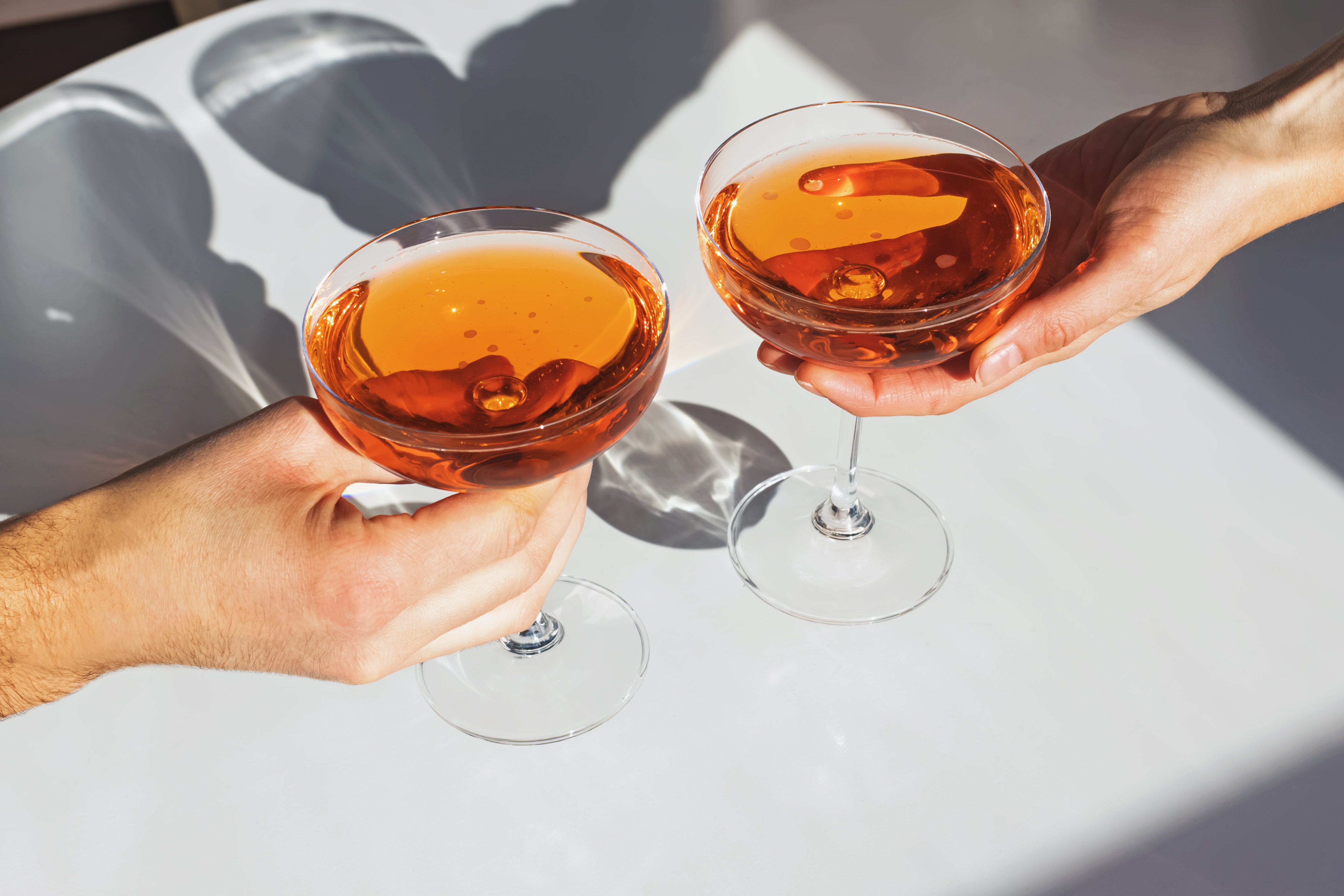
As we settle onto our barstools in the warm and inviting tasting room, Brad takes his spot behind the bar and pulls out two chilled coupe glasses. “So how much do you know about Amaro in general?” asks Brad as he uncorks a large bottle of a silky-looking bright copper liquid. I shrug my shoulders, my eyes focused on the beautiful paper label reading the words “Amaro Angeleno”.
“Amaro means ‘bitter’ in Italian. We like to provide the context of what Amaro is and then back that up. Amari in general are aromatized and fortified wines from Italy, typically with some defining ingredient from that region. It might be some sort of citrus. It might be rhubarb or artichoke. Some are light and pretty, some are dark and chewy and sinister, and then all the points in between. If there was a scale of 1 to 10 of bitterness, our Amaro would fall at around a 6.”
Amari are typically bitter by nature. Bitters make you salivate and think about food, which is traditionally when they are drunk; before dinner to stimulate your appetite (aperitifs), or after dinner to aid in digestion (digestifs). However, it’s important to acknowledge that here in the United States, most of the population may not have the palate for bitters just yet, as we often use them as mixers. “Most bars in the world have an extensive list of Amari. And so we can either say ‘no, you can only drink these by themselves as they were intended’ or you can acknowledge how people are actually drinking them.”
The result of this approach to the Amaro Angeleno is a perfectly floral and lush flavored bitter. The flavor and texture are light enough that it can be enjoyed neat or poured over a giant ice cube and sipped. That is not to understate the abundance of potential that this amaro has as a mixer. Ventura Spirits not only sells the Amaro Angeleno in a 750ml bottle, but they also created the Angeleno Spritz which is sold in a 200ml can 6-pack and echoes the popular Italian Aperol Spritz but as a refreshing and light alternative inspired by the flavors of California. The Angeleno Spritz is perfect for summer days and holidays alike and can be enjoyed with a charcuterie board, with a burger on a hot summer day, or even alongside a festive celebration subbing in for sparkling wine.
Speaking of celebrations, I think it’s high time we share the wealth! We chose three cocktails highlighting the Ventura Spirits Wilder Gin and/or the Amaro Angeleno to enjoy however and whenever you choose.

Featured Cocktail
Golden Negroni
A classic Italian cocktail with a California twist, the Golden Negroni replaces the standard sweet vermouth with a dryer blanc vermouth and swaps the well-known dark red Campari for the golden hues and floral notes of Amaro Angeleno. The Wilder gin infuses bright verdant flavors to make this cocktail a refreshing sipper on a hot day.
Recipe
1 oz. Wilder gin
1 oz. blanc vermouth
1 oz. Amaro Angeleno
Add gin, amaro, and vermouth into a mixing glass filled with ice, and stir until well chilled. Pour into a rocks or coupe glass over a large ice cube. Garnish as desired.
Traditional Negroni garnish: orange peel
Golden Negroni garnish: golden berries and fresh thyme.


Featured Cocktail
Angeleno Americano
Some might remember the Americano as the first drink ever ordered by James Bond in the debut novel of the famous spy series. Originally named the “Milano-Torino” due to its origination in Milan, Italy, The Americano was renamed at the turn of the 20th century because of its popularity with American tourists. Once again, we’ve substituted the Italian Campari with the brighter Amaro Angeleno for a new take on a historical cocktail.
Recipe
1.5 oz. Amaro Angeleno
1.5 oz. sweet vermouth
2 oz. soda water, to taste
Pour Angeleno Amaro and sweet vermouth into a rocks glass with 1-2 large ice cubes.
Top with soda water and garnish as desired.
Traditional Americano garnish: sliced lemon, lime, or orange.
Angeleno Americano garnish: Candied and dried orange slice and a leaf of fresh sage.


Featured Cocktail
Pixie Garden Spritz
An effortless al fresco libation, the Pixie Garden Spritz utilizes the ready-to-drink Angeleno Spritz for quick and easy assembly. Staying true to Ventura Spirits’ mission to employ local flavors, we added a splash of Ojai pixie juice and rose water to add whimsy and elegance to this poolside refreshment.
Recipe
1 can Angeleno Spritz
1 Ojai Pixie tangerine
1/2 oz. rose water
Pour Ojai pixie juice and rose water into a highball glass filled with crushed or cubed ice. Top with Angeleno Spritz.
Garnish as desired with fruit and edible flowers.


