

Why luxury property buyers are balancing sustainability with convenience
While electric vehicles (EVs) have long been lauded as a consummate symbol of sustainability, in practice many eco-conscious buyers are taking a more tempered approach. By and large, they are choosing hybrid models—vehicles that have both a gas-powered engine and an electric motor—over fully electric options. In fact, S&P Global Mobility data released in April 2024 reveals that U.S. registrations for hybrid vehicles rose by 48% in the first quarter of 2024, but by just 5.2% for EVs.
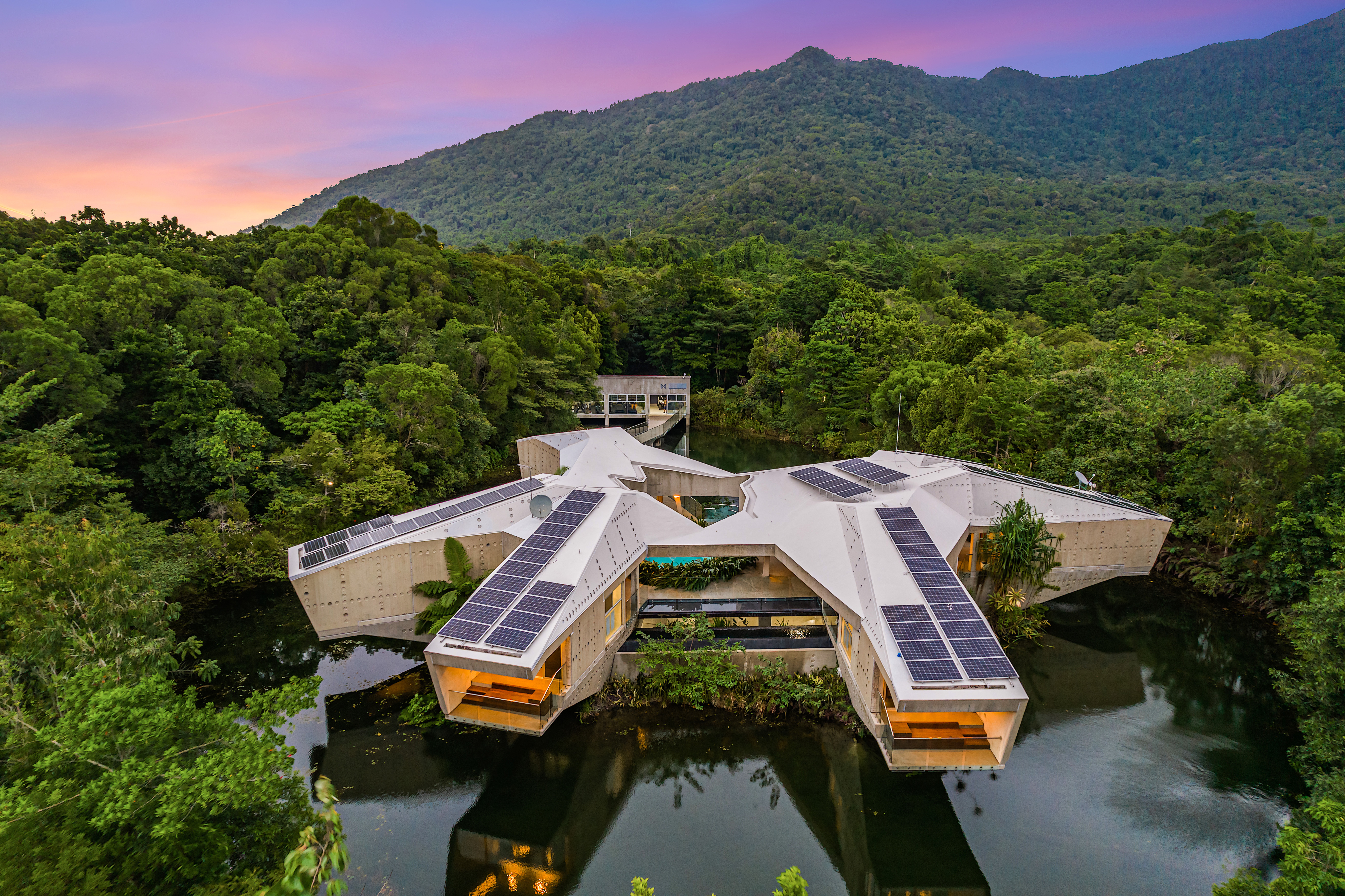
Some luxury-home buyers are taking a similar approach when investing in real estate. Hybrid homes—which include sustainable design features such as solar panels, rainfall-harvesting systems or green roofs—are becoming increasingly common. According to the 2025 Sotheby’s International Realty agent survey, eco- amenities, sustainable materials and solar panels are the top environmentally friendly extras buyers are seeking.
Ryan MacLaughlin, owner and principal broker, Island Sotheby’s International Realty in Maui, Hawaii, says, “100% of the homes we’re selling at the high end have some sort of sustainable feature.”
“It’s become a selling point in a way it hasn’t been before,” says Anders Elbe, global real estate advisor, Skeppsholmen Sotheby’s International Realty in Stockholm, Sweden.
Saving Money While Adding Value

When asked why luxury clients invest in hybrid homes so reliably, Sotheby’s International Realty agents say the answer is two-fold: eco-friendly design features help lower utility costs over time and add value to the property. For financially savvy homeowners, being environmentally conscious is typically a win-win.
“The high-end homeowner is still the most price-conscious on the market,” says MacLaughlin. “Even though they have money to spend, they have been successful for a reason. They don’t want to waste money and sustainable features help them feel confident they can run their homes as efficiently as possible at a lower cost.”
Darlene Streit, global real estate advisor, Sotheby’s International Realty – Santa Fe Brokerage in New Mexico, finds that her buyers are often willing to pay a premium if sustainability features are already in place. “There was a craze with people renovating their homes to be more sustainable during the pandemic and now I find that more people want that done for them,” she says. “Renovating is not as easy as it appears, nor does it cost exactly what the contractor tells them. They will pay more to have it done, rather than have to worry about doing it themselves.”
While there’s debate about exactly how much value sustainable features add to a home, an October 2024 article published by Freddie Mac, one of the largest buyers of mortgages in the U.S., found that energy- efficient homes typically sold for 3% to 5% more than less-sustainable properties.
What to Invest In
When building or converting an existing property into a hybrid home, increasing its overall value requires the careful selection of sustainability features tailored to the building’s size and the local climate. In sunny Hawaii, for example, solar panels are hugely popular, says MacLaughlin.

This chic, light-filled villa on a large beachfront lot enjoys water and sunset views as well as a desirable location just minutes from Vaxholm, Sweden.
According to the U.S. Energy Information Administration (EIA), in 2023 solar panels accounted for just 3.9% of the electricity generated in the U.S. However, as attitudes toward climate continue to change, that number is expected to grow rapidly. The EIA estimated in January 2024 that solar panel energy generation will grow 75% by the end of 2025, accounting for 286 billion kilowatt-hours (kWh) that year. Solar panels are typically installed with a storage system, such as a battery, which can save excess electricity for later use.

EnergySage, a solar-power marketplace funded by the U.S. Department of Energy, estimates that the average solar panel installation costs around US$33,763. Because Hawaii receives an average of 25 to 30 inches of rain each year—more than any other U.S. state—MacLaughlin says that water-catchment systems are also a common hybrid home feature. But Streit has seen plenty of them in Santa Fe’s drier climate, too. Rainwater harvesting involves collecting and storing water from a home’s gutters for later use around the house. Unlike tap water, it has not been filtered or chemically treated, so it should not be consumed or used for cooking, bathing or watering edible plants unless a proper filtration and disinfecting system is also installed. However, stored rainwater is safe to use for purposes such as irrigating ornamental plants or washing cars.
 Valued at just over US$1 billion in 2024, the market for rainwater harvesting systems is projected to reach US$1.5 billion by 2031, according to a July 2024 report by Verified Market Research.
In Sweden, green roofs—which feature vegetation planted over a waterproof membrane—aren’t just a popular way to be more sustainable. According to Elbe, legislation exists to help make them increasingly more prominent. “In some cases, government regulations mandate them as part of the process of acquiring a building permit,” he says.
At their most basic level, these living roofs act as additional insulation. However, green roofs also help to manage stormwater runoff, particularly in cities where concrete and paved surfaces prevent it from being easily absorbed into the ground. According to a September 2024 report in The Guardian, homes with features like green roofs typically use 80% to 90% less energy and have ambient indoor temperatures up to 7°F lower than other homes. With the optional inclusion of a rainwater-harvesting system, green roofs can contribute significantly to household water needs.
The cost of a green roof can vary greatly, depending on the roof slope, size and type of vegetation used. However, according to a July 2024 report in the journal Science of The Total Environment, the cost of installing a green roof can often be fully justified in terms of its long-term sustainability.
While a green roof’s insulating properties can help to naturally maintain a hybrid home’s interior temperature, a smart thermostat gives a homeowner precise control. These Wi-Fi-connected, AI-driven devices automatically switch the heating system on or off according to a set schedule and can be remotely adjusted using an app. They save energy and money by avoiding unnecessary heating or cooling.

With panoramic views of the Atlantic Ocean, this modernist residence is a holistic santuary on the coastline of Sea Island, Georgia.
“Smart thermostats are a great choice for those who have multiple properties and want the security of knowing they can monitor their homes from afar,” says Streit, who has seen many installed in luxury homes in Santa Fe, New Mexico. That number is slowly growing nationally as well. Market research firm Statista found in October 2024 that 14.1% of American households had a smart thermostat, and this is expected to hit 16.3% by 2029.
Peace of Mind
Innovative technologies harnessing renewable resources are becoming increasingly prevalent. Yet luxury homeowners, who are often early adopters of new innovations, have been gradually embracing these advancements. Sotheby’s International Realty agents say their clients’ preferences for hybrid homes, rather than full self-sufficiency, come down to reliability and peace of mind.
“Some homeowners don’t fully trust the technology yet,” Streit says, adding that some of her clients feel these advances are simply too new. “I think people are still a little nervous about abandoning what they’re used to,” she says. “They like having the ability to switch back and forth—say, between solar power and the grid—as needed. It gives them the best of both worlds.“

Irrigation systems keep the 10.89 acres of pastures lush on this gated estate in the Tumalo community near Bend, Oregon, where sustainable farm living meets luxury.
In other cases, hybrid living offers an added layer of security, given that sustainable features are often weather dependent. MacLaughlin agrees that homeowners, particularly those in the luxury market, want to know that their assets will be protected, no matter what nature throws their way.
Looking to the Future
That said, the limitations—real or perceived—of sustainable homes may eventually fade. All of the agents interviewed feel that sustainability will continue to have a growing impact on the real estate market, largely due to a shift in cultural attitudes. “At the end of the day, it’s not about the money you can save or what your home can do,” says Streit. “It’s about caring for our planet and our ecosystem. People are becoming more conscious of that and I think the sentiment is only going to get stronger.”
Elbe concurs. He believes that this is happening on a global scale. “There are deeper cultural changes happening now,” he says. “As sustainability becomes a standard expectation in high-end homes, it will stop being a trend and start becoming a long-term shift in how wealth and responsibility are perceived.”


